

However, it was not until the 15th century that spies were specially trained for their purpose.[15] It was around this time that the word shinobi appeared to define and clearly identify ninjas as a secretive group of agents. Evidence for this can be seen in historical documents, which began to refer to stealthy soldiers as shinobi during the Sengoku period.[21] Later manuals regarding espionage are often grounded in Chinese military strategy, quoting works such as The Art of War (Sunzi Bingfa), by Sun Tzu.[22]
Development
The ninja emerged as mercenaries in the 15th century, where they were recruited as spies, raiders, arsonists and even terrorists. Amongst the samurai, a sense of ritual and decorum was observed, where one was expected to fight or duel openly. Combined with the unrest of the Sengoku era, these factors created a demand for men willing to commit deeds considered not respectable for conventional warriors.[1][2] By the Sengoku period, the shinobi had several roles, including spy (kanchō), scout (teisatsu), surprise attacker (kishu), and agitator (konran).[21] The ninja families were organized into larger guilds, each with their own territories.[23] A system of rank existed. A jōnin ("upper man") was the highest rank, representing the group and hiring out mercenaries. This is followed by the chūnin ("middle man"), assistants to the jōnin. At the bottom was the genin ("lower man"), field agents drawn from the lower class and assigned to carry out actual missions.[24]Iga and Kōga clans

Likewise, a supplement to the Nochi Kagami, a record of the Ashikaga shogunate, confirms the same Iga origin:"There was a retainer of the family of Kawai Aki-no-kami of Iga, of pre-eminent skill in shinobi, and consequently for generations the name of people from Iga became established. Another tradition grew in Kōga".[26]
A distinction is to be made between the ninja from these areas, and commoners or samurai hired as spies or mercenaries. Unlike their counterparts, the Iga and Kōga clans produced professional ninja, specifically trained for their roles.[21] These professional ninja were actively hired by daimyos between 1485 and 1581,[21] until Oda Nobunaga invaded Iga province and wiped out the organized clans.[28] Survivors were forced to flee, some to the mountains of Kii, but others arrived before Tokugawa Ieyasu, where they were well treated.[29] Some former Iga clan members, including Hattori Hanzō, would later serve as Tokugawa's bodyguards.[30]"Inside the camp at Magari of the Shogun [Ashikaga] Yoshihisa there were shinobi whose names were famous throughout the land. When Yoshihisa attacked Rokkaku Takayori, the family of Kawai Aki-no-kami of Iga, who served him at Magari, earned considerable merit as shinobi in front of the great army of the Shogun. Since then successive generations of Iga men have been admired. This is the origin of the fame of the men of Iga."[27]
Following the Battle of Okehazama in 1560, Tokugawa employed a group of eighty Kōga ninja, led by Tomo Sukesada. They were tasked to raid an outpost of the Imagawa clan. The account of this assault is given in the Mikawa Go Fudoki, where it was written that Kōga ninja infiltrated the castle, set fire to its towers, and killed the castellan along with two hundred of the garrison.[31] The Kōga ninjas are said to have played a role in the later Battle of Sekigahara (1600), where several hundred Kōga assisted soldiers under Torii Mototada in the defence of Fushimi Castle.[32] After Tokugawa's victory at Sekigahara, the Iga acted as guards for the inner compounds of Edo Castle, while the Kōga acted as a police force and assisted in guarding the outer gate.[30] In 1614, the initial "winter campaign" at the Siege of Osaka saw the ninja in use once again. Miura Yoemon, a ninja in Tokugawa's service, recruited shinobi from the Iga region, and sent ten ninjas into Osaka Castle in an effort to foster antagonism between enemy commanders.[33] During the later "summer campaign", these hired ninjas fought alongside regular troops at the Battle of Tennōji.[33]
Shimabara rebellion
A final but detailed record of ninjas employed in open warfare occurred during the Shimabara Rebellion (1637–1638).[34] The Kōga ninja were recruited by shogun Tokugawa Iemitsu against Christian rebels led by Amakusa Shirō, who made a final stand at Hara Castle, in Hizen Province. A diary kept by a member of the Matsudaira clan, the Amakusa Gunki, relates: "Men from Kōga in Omi Province who concealed their appearance would steal up to the castle every night and go inside as they pleased."[35]The Ukai diary, written by a descendant of Ukai Kanemon, has several entries describing the reconnaissance actions taken by the Kōga.
"They [the Kōga] were ordered to reconnoitre the plan of construction of Hara Castle, and surveyed the distance from the defensive moat to the ni-no-maru (second bailey), the depth of the moat, the conditions of roads, the height of the wall, and the shape of the loopholes."[35] — Entry: 6th day of the 1st month

As the siege went on, the extreme shortage of food later reduced the defenders to eating moss and grass.[38] This desperation would mount to futile charges by the rebels, where they were eventually defeated by the shogunate army. The Kōga would later take part in conquering the castle:"We dispersed spies who were prepared to die inside Hara castle. ...those who went on the reconnaissance in force captured an enemy flag; both Arakawa Shichirobei and Mochizuki Yo'emon met extreme resistance and suffered from their serious wounds for forty days."[37] — Entry: 27th day of the 1st month
With the fall of Hara Castle, the Shimbara Rebellion came to an end, and Christianity in Japan was forced underground.[40] These written accounts are the last mention of ninjas in war.[41]"More and more general raids were begun, the Kōga ninja band under the direct control of Matsudaira Nobutsuna captured the ni-no-maru and the san-no-maru (outer bailey)..."[39] — Entry: 24th day of the 2nd month
Oniwaban
In the early 18th century, shogun Tokugawa Yoshimune founded the oniwaban, an intelligence agency and secret service. Members of this office, the oniwabanshū ("garden keeper"), were agents involved in collecting information on daimyos and government officials.[42] The secretive nature of the oniwaban — along with the earlier tradition of using Iga and Kōga clan members as palace guards — have led some sources to define the oniwabanshū as "ninjas".[43] This portrayal is also common in later novels and jidaigeki. However, there is no written link between the earlier shinobi and the later oniwabanshū.Roles

"Within Hataya castle there was a glorious shinobi whose skill was renowned, and one night he entered the enemy camp secretly. He took the flag from Naoe Kanetsugu's guard ...and returned and stood it on a high place on the front gate of the castle

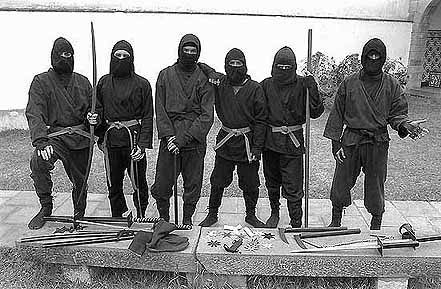
Real Ultimate Power
Hi, this site is all about ninjas, REAL NINJAS. This site is awesome. My name is Robert and I can't stop thinking about ninjas. These guys are cool; and by cool, I mean totally sweet.
Facts:
1. Ninjas are mammals.
2. Ninjas fight ALL the time.
3. The purpose of the ninja is to flip out and kill people.
2. Ninjas fight ALL the time.
3. The purpose of the ninja is to flip out and kill people.
Weapons and gear:
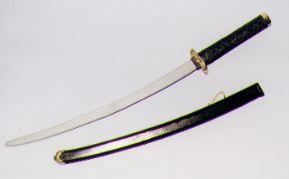
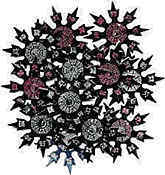
Ninja Sword Ninja Stars
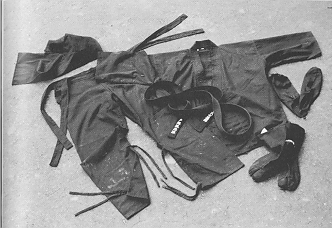
Ninja Outfit
Testimonial:
Ninjas can kill anyone they want! Ninjas cut off heads ALL the time and don't even think twice about it. These guys are so crazy and awesome that they flip out ALL the time. I heard that there was this ninja who was eating at a diner. And when some dude dropped a spoon the ninja killed the whole town. My friend Mark said that he saw a ninja totally uppercut some kid just because the kid opened a window.
And that's what I call REAL Ultimate Power!!!!!!!!!!!!!!!!!!
If you don't believe that ninjas have REAL Ultimate Power you better get a life right now or they will chop your head off!!! It's an easy choice, if you ask me.
Ninjas are sooooooooooo sweet that I want to crap my pants. I can't believe it sometimes, but I feel it inside my heart. These guys are totally awesome and that's a fact. Ninjas are fast, smooth, cool, strong, powerful, and sweet. I can't wait to start yoga next year. I love ninjas with all of my body (including my pee pee).

